
EPDM, FKM, Silicone or PTFE for CIP and Chemical Service: Why "the Viton Version" Is Often the Wrong Fix
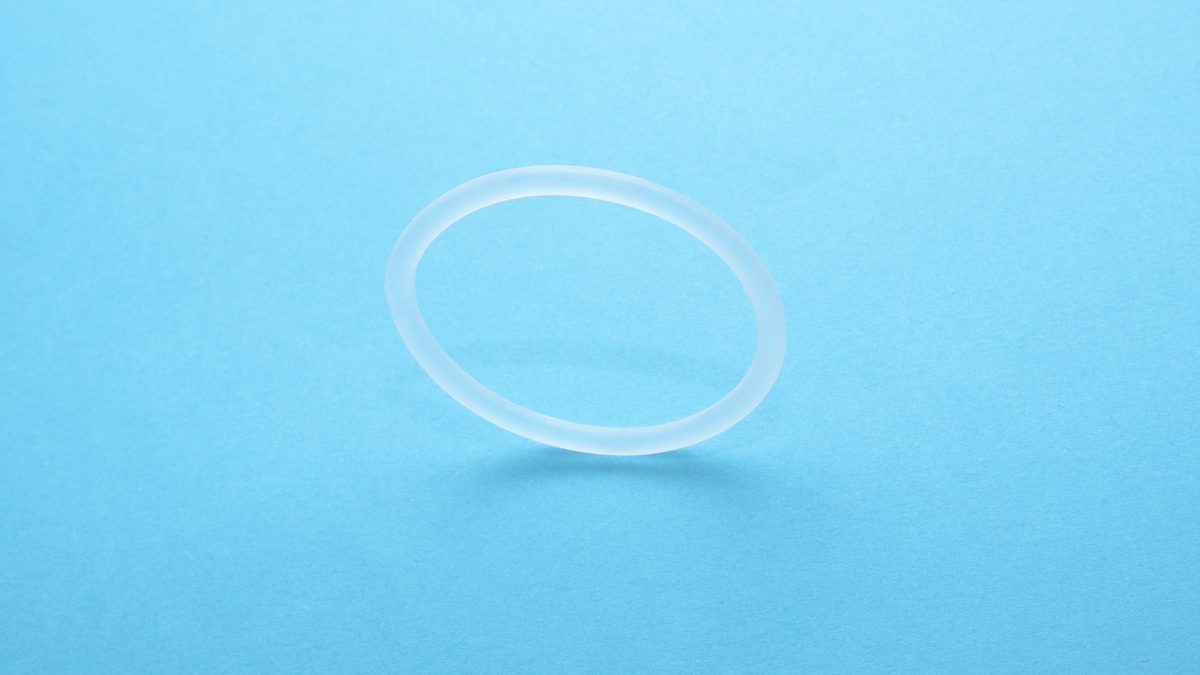
If your seals are failing during caustic clean-in-place and someone asks for "the Viton version," stop. Viton is a Chemours trademark for one family of fluoroelastomer, FKM, and standard FKM is one of the worst common choices for hot sodium hydroxide. Chemours' own selection guide rates its standard A, B and F types "Not Recommended" for high pH caustics such as NaOH and KOH, and for amines. For caustic, sodium hypochlorite, hot water and steam at CIP temperatures, EPDM is the usual first answer. For mineral acids, hydrocarbons, oils and high temperature, FKM is. Silicone buys temperature range at the cost of mechanical strength and resistance to concentrated acids and steam. PTFE resists nearly everything but is not an elastomer, so it is used as a jacket, backup or energized lip seal rather than a plain O-ring. In almost every borderline case, concentration and temperature decide.
What each family tolerates, from the published tables
EPDM (ethylene propylene diene rubber). Parker's O-Ring Handbook lists EPDM heat resistance to 150°C (302°F), with a maximum of 204°C (400°F) in water or steam, and cold flexibility to about -57°C (-70°F). Its resistance list covers hot water and steam, many polar solvents and acids; its "not compatible with" line is just mineral oil products: oils, greases and fuels. Freudenberg's process industry manual says EPDM "exhibit[s] good chemical resistance in hot water, steam, acids and alkaline solutions" and is "of limited use in products containing fats or oils." Trelleborg's compatibility guide rates EPDM A (very good) for water to 135°C, for water vapour below 140°C, for both of its sodium hydroxide lines and for sodium hypochlorite solution, and U (unsuitable) for mineral oil and concentrated nitric acid.
FKM (fluorocarbon rubber). Parker lists FKM heat resistance to 204°C (400°F), cold flexibility to -26°C (-15°F) for standard grades, resistance to mineral oils, aromatic and chlorinated hydrocarbons and gasoline, and lists ammonia gas, amines, alkalis, superheated steam and glycol brake fluids as not compatible. Chemours explains why: fluoroelastomers that contain copolymerized vinylidene fluoride "are subject to attack by high pH materials, including caustics and amines," and standard grades are not resistant to low molecular weight ketones such as MEK and acetone. Specialty grades change the answer. Chemours' ETP type is "inherently resistant to attack by base" and is rated Excellent for caustics, amines and ketones; Parker's material guide lists base and amine resistant FKM compounds and a steam resistant perfluoroelastomer. So "FKM" on a datasheet is not one material, and the grade matters as much as the family. Seal and seat material is a selectable option on most process and pneumatic valves, so the grade is usually a line on the order, not a custom part.
Silicone (VMQ). Parker's material guide gives silicone compounds a working range of roughly -60 to 450°F (-51 to 232°C). Freudenberg states VMQ cannot be used in concentrated acids, concentrated oxidizing media, or water and steam above 100°C, and ERIKS' O-ring handbook notes it is "not recommended for dynamic O-ring sealing applications due to relatively low tear strength."
PTFE. Trelleborg describes its PTFE based seals as having "universal chemical compatibility," with an operating range from -253°C to 300°C. The catch is mechanical. Freudenberg says that at high pressures and with many temperature changes "pure PTFE seals prove to be unsuitable" because of "its tendency to cold flow and lack of elasticity." Parker's glossary defines cold flow as "continued deformation under stress" and defines an elastomer by its "memory sufficient to return to its original shape." PTFE lacks that memory, which is why it shows up as an FEP or PFA jacket over an elastomer core, as a backup ring, or as a lip seal with a metal spring energizer that "supplies the load required for sealing at low pressures."
Concentration and temperature decide most cases
A compatibility table is not a yes/no list. Trelleborg's guide rates FKM B (good) in water to 80°C, C (limited) in water to 135°C, and U in water vapour below 140°C. The same guide carries two sodium hydroxide lines, one labeled simply sodium hydroxide and one labeled caustic soda, and rates FKM C on the first and B on the second, and rates silicone B in water to 80°C but U at 135°C. Chemours' Table 4 shows the grade effect: standard Viton A is rated 3 (good) in water, steam and mineral acids; GLT, GFLT and ETP types are rated 1 (excellent).
Typical CIP chemistry sits right where those lines move. Freudenberg lists alkaline CIP at 2 to 3 percent NaOH and 30 to 80°C, acidic CIP at 0.5 to 3 percent nitric acid at 30 to 80°C, and peroxide based disinfectants at 0.3 to 1 percent. Precision Polymer Engineering notes that in steam-in-place service EPDM runs much closer to its 150°C upper limit, so a material that is excellent in CIP may be marginal in SIP. Trelleborg's own caveat applies to every table: ratings come from immersion tests "predominantly at room temperature and may not represent adequately the conditions in the field," and users should "conduct their own tests."
Where the tables disagree
Expect it. Trelleborg rates FKM A for sodium hypochlorite solution, while Freudenberg warns that FKM "reacts very sensitively when used with highly oxidizing cleaning agents and disinfectants containing nitric acid, formic acid or peracetic acid." Chemours rates standard FKM "good" in steam, while Parker lists superheated steam as not compatible and Trelleborg rates it unsuitable in water vapour below 140°C. Different test methods, grades, exposure times and temperatures explain most of it. When two published tables disagree, the tiebreaker is the equipment manufacturer's own compatibility table for the exact compound in your pump or valve, because that is the material that was actually tested and warranted.
One seal failed, or all of them?
Chemical attack is not selective. If the caustic is eating the elastomer, every EPDM or FKM part exposed to the same stream, at the same temperature, degrades on roughly the same clock: O-rings, diaphragms, valve seats and gaskets. Freudenberg describes two chemical mechanisms, splitting of cross-link points (softening) and formation of new cross-links (hardening), plus the swelling when EPDM meets mineral oil.
If only one part fails, suspect mechanics first. Parker's handbook says that under high pressure "the primary cause of seal failure is extrusion," the flow of seal material into the clearance between mating parts; the nibbled edge that leaves behind is a design or clearance problem, not a chemistry problem. Spiral failure, where a seal rolls and twists during installation and then fails in service, is described in Parker's radial seal guide. Freudenberg's damage analysis adds gap extrusion from varying pressures and media expansion, and twisting of large O-rings during mounting. Thermal damage reads differently again: Parker notes that "prolonged exposure to excessive heat causes permanent hardening and usually destroys the usefulness of the seal," so a hard, cracked seal in a pump that ran dry or cavitated is a heat story, not a caustic story. Misalignment and installation damage leave localized cuts or flat spots on one seal while its neighbors look fine.
What to send the manufacturer before you change anything
Manufacturers can rule a material in or out quickly if they get the right packet. Send clear photos of the failed part next to a new one, including the sealing face and the damaged region; the equipment model and serial number; the full process chemistry with concentrations and temperatures, including every CIP and sanitizer step, not just the product; CIP cycle times and peak temperatures; duty cycle and pressure; and whether one seal or several failed. Freudenberg's manual explicitly points users to a materials advisory service "in the event of doubt," and that is the normal path, not an exception.
Why the supplier's caution should win
A customer's part preference is usually a memory of what worked somewhere else. The manufacturer's caution is based on the compound actually molded into that seal, its tested limits and its warranty. Food and pharma add a second layer: FDA 21 CFR 177.2600 governs which substances may go into repeated-use rubber articles and sets extraction limits for aqueous and fatty food contact, and 3-A Sanitary Standard 18-03 requires compatibility testing with cleaning and sanitizing agents under use-simulating conditions. A substitution that the supplier has not qualified can break both. Give the manufacturer the data, ask for the material they will stand behind in your chemistry at your temperature, and let the table, not the trademark, make the call.
Sources
- The Chemours Company, Viton Fluoroelastomers Selection Guide, document C-11021 (9/19), including Table 4, Differences in Fluid Resistance Among Types
- Parker Hannifin, Parker O-Ring Handbook, ORD 5700, 50th Anniversary Edition (2021), Sections 1.5, 2.2.4 and 2.2.7
- Freudenberg Sealing Technologies, Sealing Technology Manual for the Process Industry
- Trelleborg Sealing Solutions, Chemical Compatibility Guide, edition August 2012
- Parker Hannifin, O-Ring Material Offering Guide, ORD 5712 (2021)
- ERIKS, Technical Handbook O-rings, Basic Elastomers and Compound Selection chapters (published technical handbook only)
- Trelleborg Sealing Solutions, Turcon Variseal catalog, edition June 2026
- Parker Hannifin, O-Ring Division, Technical Glossary
- Precision Polymer Engineering, Sealing, SIP and CIP: what do I need to know? technical paper TP00120-20
- Parker Hannifin, TechSeal Division, Radial Seal Design Guide, TSD 5440
- U.S. Food and Drug Administration, 21 CFR 177.2600, Rubber articles intended for repeated use, via eCFR
- 3-A Sanitary Standards, Inc., 3-A Sanitary Standard 18-03, Multiple-Use Rubber and Rubber-Like Materials
- Stateside Industrial Solutions, Vacuum Grippers for Food and Pharma Packaging: A Hygienic Selection Checklist
All sources retrieved and independently verified October 2026.
Seals failing during CIP?
Send us the photos, model and serial, and your cleaning chemistry with concentrations and temperatures. We will take the packet to the manufacturer and quote the seal material they will stand behind.
Request a Quote →