
Your 2027 Power Bill Is Already Forecast Higher — Start With Motors and Compressed Air
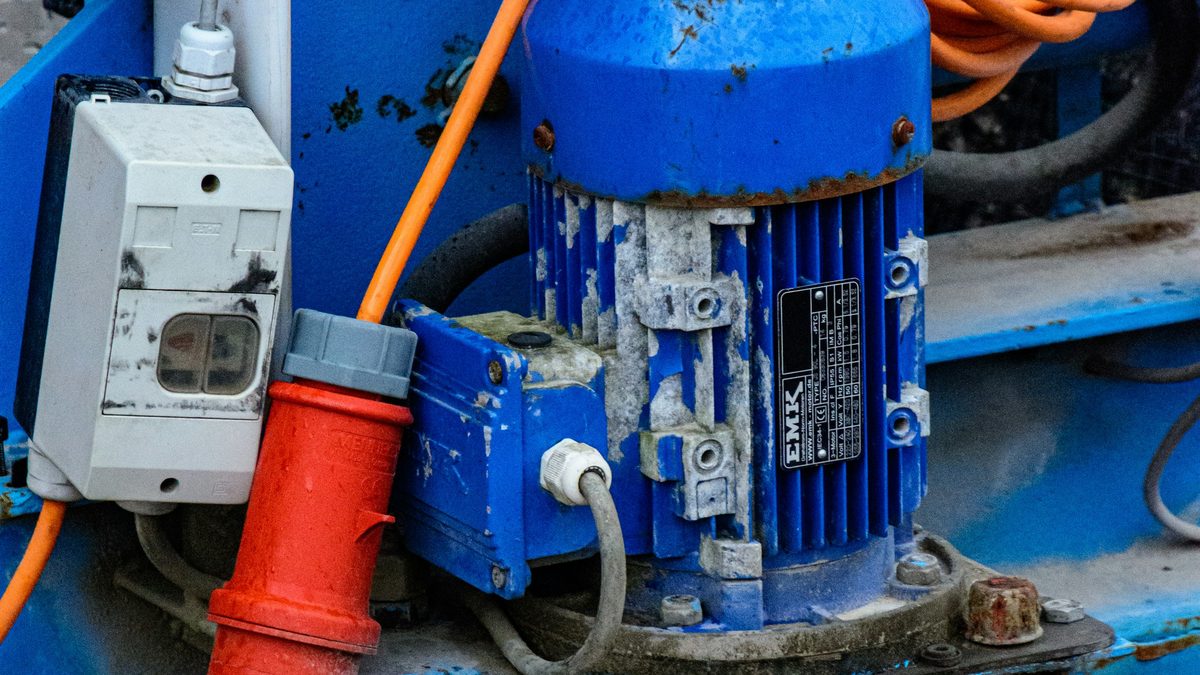
If you're building a 2027 budget right now, the federal government has already done part of the math for you — and the number went up. Twice this summer, actually.
The U.S. Energy Information Administration's August 2026 Short-Term Energy Outlook (forecast dated August 11, 2026) puts the average U.S. industrial retail electricity price at 9.01 cents per kilowatt-hour in 2026 and 9.05 cents in 2027, up from 8.62 cents in 2025. Run the arithmetic on EIA's published figures and 2025-to-2026 works out to roughly a 4.5% increase — our calculation, not EIA's stated number. And the forecast is drifting upward month to month: July's edition had those same years at 8.92 and 8.95 cents. One month later, both moved up about a tenth of a cent.
To be clear about what this is: a forecast of the industrial sector average, not a prediction of your plant's tariff or your state's rates. Your utility, your rate class, and your demand charges will tell their own story. But when the sector average climbs in the federal forecast twice in one summer, it's a fair signal for how to set the budget line.
The expensive quarter is the one you're standing in
EIA's quarterly detail matters if you plan production by season: the industrial price is forecast to peak in Q3 — 9.46 cents in 2026, 9.39 in 2027 — against Q4 values of 8.73 and 8.75. Summer production carries the highest energy cost per unit. If you model energy as one flat annual number, the third quarter is quietly subsidized by the other three on paper — and over-budget in reality.
Demand is rising alongside price. EIA forecasts industrial-sector electricity sales at 1,063.8 billion kWh in 2026 and 1,105.9 billion in 2027, up from 1,042.2 billion in 2025, and notes that "U.S. electricity generation has been rising to meet growing demand from data centers" — first-half 2026 power-sector generation ran 1.8% above the same period last year. What that demand growth does to any specific plant's rate isn't something the forecast breaks out, so we won't pretend it does. The direction, though, isn't subtle.
Where the recoverable kilowatt-hours actually sit
Here's the useful part: the federal studies that map industrial electricity use point at the same two systems every time.
Motors first. The DOE-sponsored Motor System Market Assessment (published by Lawrence Berkeley National Laboratory in 2021, based on fieldwork covering three-phase motors of 1 horsepower and up) found motor-driven systems consume about 547,000 GWh a year — roughly 69% of industrial-sector electricity use. That's pumps, fans, compressors, conveyors, and everything else that spins. The vintage matters — it's a 2021 study, not a 2026 measurement — but no lighting retrofit or thermostat program touches a share like that. If you're sequencing energy work, drive and motor loading, belt drives, and pump/fan control changes are where the kilowatt-hours actually live.
Compressed air second — and cheapest. DOE's compressed-air guidance (a tip sheet dating to 2004, so treat the numbers as long-standing rules of thumb rather than fresh survey data) states that leaks often waste 20–30% of a compressor's output, and sets a practical target: leaks at 5–10% of total system flow for an industrial facility. The usual suspects are the fittings, hoses, quick disconnects, FRL units, condensate traps, valves, flanges, and point-of-use devices scattered across every plant. The recommended hunting tool is an ultrasonic acoustic detector, and the losses aren't trivial: by DOE's own orifice table, a 1/16-inch leak passes 6.31 cfm at 100 psig — and a 1/4-inch leak passes over 100 cfm, running around the clock whether you're producing or not.
We won't promise you a savings percentage or a payback period — nobody can from a federal average, and any number we gave you would be invented. What the sources support is simpler: the load concentrates in motor systems, and the fastest recoverable waste is usually hissing somewhere in your air lines.
The walk-the-plant checklist
- Budget 2027 at a higher unit price than your 2025 actuals, and model Q3 separately — the federal forecast says summer is the expensive quarter.
- Sequence by load share: motor-driven systems first. Look at oversized motors running lightly loaded, throttled pumps and dampered fans that could be speed-controlled, and worn belt drives.
- Make leak surveys a recurring maintenance task, not a one-time project — with a target (5–10% of system flow), a named detection method, and repair follow-up on the work order.
- Re-walk it quarterly. Leaks come back. So do budget reviews.
How Stateside can help
If motor loading or compressed-air leaks are on your list this year, we can help source the drives, sensors, and pneumatic components behind either project.
Sources
- EIA Short-Term Energy Outlook, August 2026 edition
- EIA Short-Term Energy Outlook, July 2026 edition
- U.S. Industrial and Commercial Motor System Market Assessment, Vol. 1 — LBNL/DOE, 2021
- DOE Compressed Air Tip Sheet #3 — Minimize Compressed Air Leaks (DOE/GO-102004-1964)
- DOE — Motor Systems program page
- DOE — Compressed Air Systems program page
Sequencing energy work for 2027?
We can help source the motors, drives, sensors, and pneumatic components behind a motor-loading or leak-reduction project.
Talk to Our Team →