
IP67 vs. IP69K vs. NEMA 4X: Reading Protection Ratings Before You Buy a Washdown Sensor
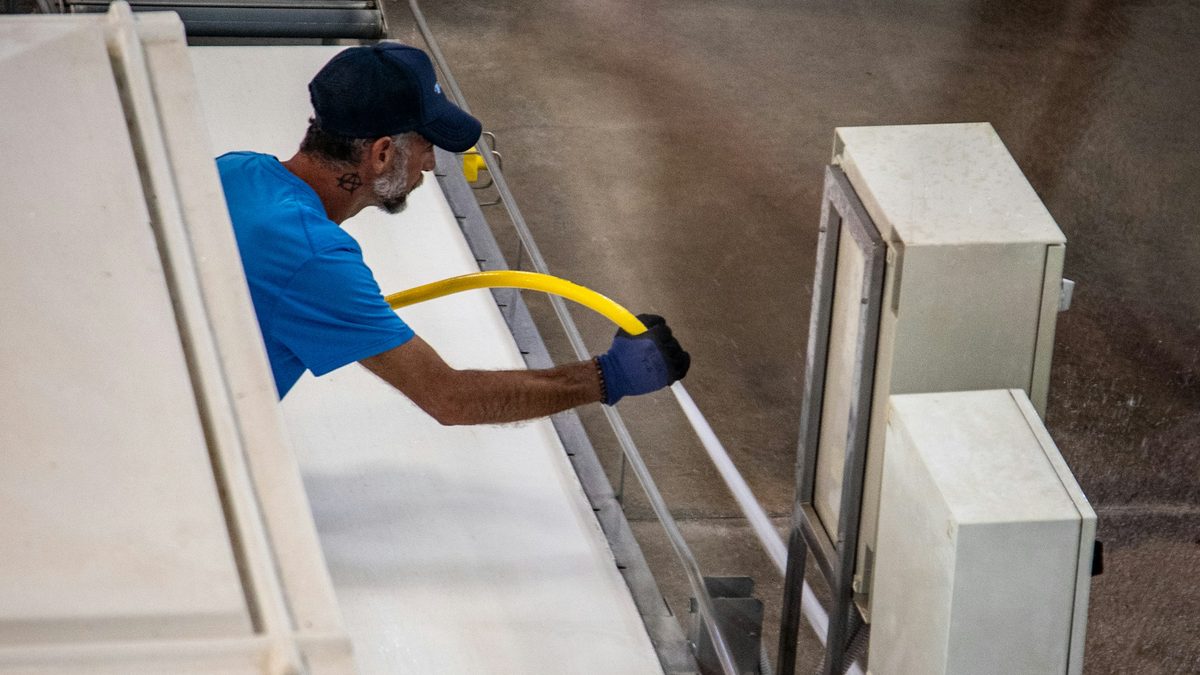
If your sensors keep dying in washdown areas, the spec sheet probably told you it would happen — you just had to know where to look. The two-digit IP number, the "K," and the NEMA Type rating each answer a different question, and mixing them up is one of the most common reasons a "sealed" device fails early. Here's how to read all three before the next replacement order goes out.
What the IP digits actually say
The IP code comes from IEC 60529, the international standard for degrees of protection provided by enclosures (current consolidated version: edition 2.2, 2013). Two digits, two separate tests:
First digit — solids, running 0 (no protection) up to 6 (dust tight — no ingress of dust at all).
Second digit — water, running 0 up through 8 (immersion beyond one meter) — with a special case, 9, for high-pressure spray-down.
So IP67 means dust tight, plus protection against temporary immersion — per manufacturer rating guides, submersion from 15 centimeters to 1 meter for 30 minutes. Good for splash zones, hose-adjacent mounting, and the occasional dunk.
IP69K is a different animal. Per Turck's published rating guide for proximity sensors, IP69K covers hot, high-pressure cleaning per EN 60529 and DIN 40050-9: water at 100 bar (about 1,450 psi) and 80°C (176°F), sprayed at four angles — 0°, 30°, 60°, and 90° — for 30 seconds each, with no ingress. That's a simulation of steam-jet and pressure-washer sanitation, the daily reality of food, beverage, and pharma lines. (Those test parameters come from manufacturer technical literature, not from the IEC standard text itself — the underlying standards are paywalled documents. The "K"-series designation traces to the vehicle-testing standard ISO 20653, currently at its 2023 edition.)
Two cautions the manufacturers themselves print: don't assume higher is strictly cumulative — a device rated for high-pressure spray isn't automatically rated for long immersion unless the datasheet lists both ratings. And IP ratings are self-declared by the manufacturer, tested either in-house or by a third-party lab — reputable brands stand behind them, but the system runs on the datasheet, not on a central certification registry.
NEMA Type is not the same thing — and NEMA says so
Here's where U.S. buyers get burned. It's tempting to grab an "equivalence chart" that maps IP66 to NEMA 4 and call it a day. NEMA's own FAQ says you can't do that: "It is not possible to state that an IEC IP degree rating is equivalent to a NEMA Type designation."
The reason is scope. IP tests cover solid-object and water ingress — full stop. NEMA Type ratings (per NEMA 250 and UL 50E) additionally consider corrosion resistance, icing, lubricant resistance, and construction details. A NEMA Type rating may be described as meeting or exceeding an IP rating — but never the reverse. An IP number simply doesn't carry enough test coverage to claim a Type.
The "X" in 4X is the clearest example: it's about corrosion, not water. Per NEMA's FAQ, all outdoor enclosure types face 600 hours of salt-spray testing, and the corrosion-resistant types — 4X among them — face an additional 200 hours judged against a stainless-steel reference specimen. Two enclosures can shed water identically; only one of them shrugs off caustic washdown chemistry and salt air for years. That's what the X is for.
In the U.S., this is a code requirement, not a preference
Per NEMA's enclosure FAQ, IEC IP ratings cannot be used in U.S. electrical installations in place of NEMA 250 Type ratings or UL 50E Enclosure Types — and NEC Section 110.28 states that IP ratings are not a substitute for Enclosure Type ratings. One more subtlety from the same source: NEMA Type ratings apply to enclosures fully installed and ready for use, while IP degrees can apply to partially completed states. Spec language for U.S. installations should lead with Enclosure Type and treat IP as supplemental information — not the other way around.
Worth knowing this year: the reference documents behind all this have been moving. UL 50E's latest revision carries an ANSI approval date of October 17, 2025, and ISO 20653 is already flagged for revision — so a rating chart printed five years ago isn't the last word.
The part the spec sheet can't do for you
Every one of these ratings assumes the device is installed the way the test assumed. Manufacturer guidance is blunt about it: ratings apply with proper mounting, gaskets intact, and mated connectors tightened to proper torque or hand-tight — and a receptacle's rating applies to the connection point only. A sealed sensor hanging on a loose, half-mated cordset is an unrated sensor.
The takeaway
Match the rating to the actual cleaning method: splash and temporary immersion point at IP67-class devices; hot high-pressure sanitation points at IP69K-class devices; corrosive environments and U.S. code compliance point at Enclosure Type language — NEMA 250 / UL 50E — written into the spec. Then protect the rating in the field, because the best number on the datasheet can't survive a loose connector.
Sources
- IEC 60529 — Degrees of protection provided by enclosures (IP Code), IEC Webstore
- Turck — Ingress Protection: A Guide to IP and NEMA Type Ratings (B2009)
- Turck — IP Ratings for Proximity Sensors (distributor-hosted copy of manufacturer literature)
- ISO 20653:2023 — Road vehicles — Degrees of protection (IP code)
- NEMA — FAQs: Enclosures
- UL 50E — Enclosures for Electrical Equipment, UL Standards & Engagement
Specifying a washdown-rated sensor or enclosure?
Send us the environment — splash, high-pressure wash, or corrosive — and we'll help you match the right rating, not just the highest number.
Talk to Our Team →