
Estimating Freight on Crated Equipment: Class, Dimensions, Terms, and Why Per-Unit and Per-Crate Quotes Differ
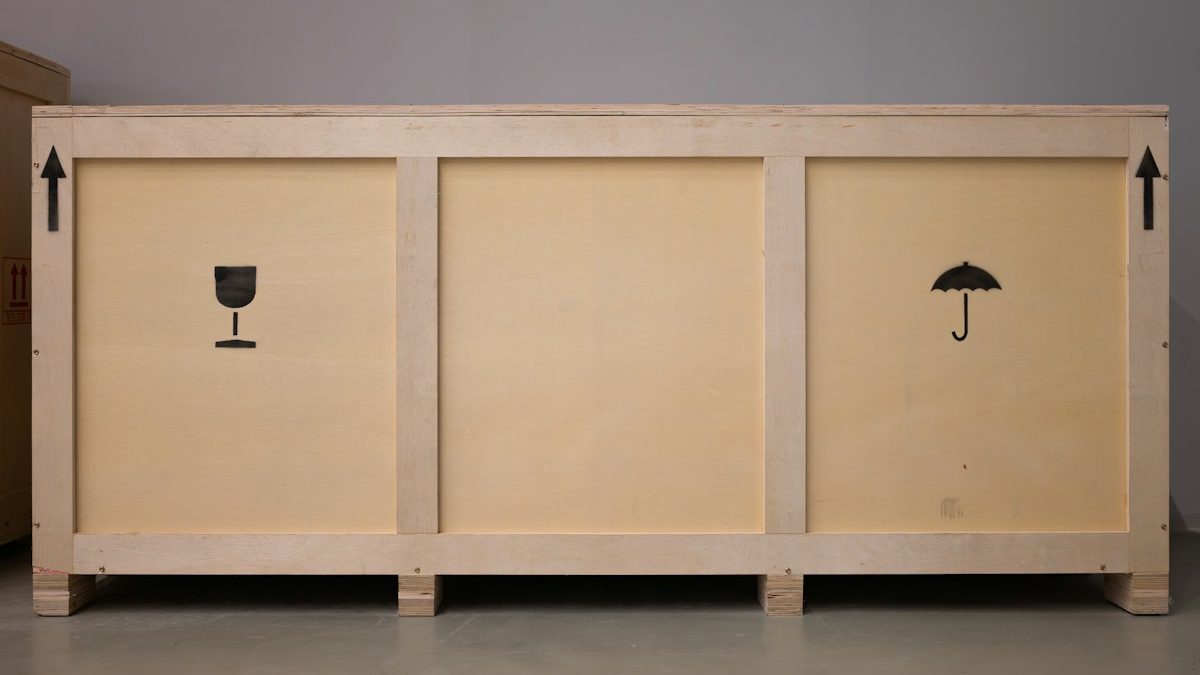
An LTL freight quote on crated equipment is built from four inputs: the shipment's NMFC freight class, its dimensions and weight (which together set density), the services your delivery address requires, and the terms that decide who pays and who bears risk. Class comes from the National Motor Freight Classification, which assigns every commodity a class from 50 to 500 based on density, handling, stowability, and liability. Since July 2025, most items without special handling concerns are classed by density alone on a 13-tier scale. Who owns the shipment in transit depends on the FOB term: under FOB origin, risk passes to the buyer when the goods are handed to the carrier; under FOB destination, risk stays with the seller until tender at your dock. A quote per unit and a quote per crate differ because carriers rate the shipment as tendered, not the items inside it: consolidating units into one crate changes density, cube, handling-unit count, and which minimum and accessorial rules fire.
What freight class is, and what changed in 2025
NMFTA, the NMFC's publisher, defines the four characteristics as density ("how heavy the freight is relative to the space it takes up"), handling ("how easy it is to move across a dock and into or out of a trailer"), stowability ("how effectively it can be stowed in a trailer"), and liability ("how likely the freight is to cause damage or be damaged").
Docket 2025-1 took effect July 19, 2025. NMFTA expanded the old 11-sub density scale to 13 sub-provisions; items under generic headings with no known handling, stowability, or liability concerns were canceled and pointed to a 13-sub density item, while items with real concerns keep characteristic-based classes. The current density breaks published by NMFTA are:
| Sub | Density (lb per cubic foot) | Class |
|---|---|---|
| 1 | Less than 1 | 400 |
| 2 | 1 but less than 2 | 300 |
| 3 | 2 but less than 4 | 250 |
| 4 | 4 but less than 6 | 175 |
| 5 | 6 but less than 8 | 125 |
| 6 | 8 but less than 10 | 100 |
| 7 | 10 but less than 12 | 92.5 |
| 8 | 12 but less than 15 | 85 |
| 9 | 15 but less than 22.5 | 70 |
| 10 | 22.5 but less than 30 | 65 |
| 11 | 30 but less than 35 | 60 |
| 12 | 35 but less than 50 | 55 |
| 13 | 50 or greater | 50 |
Source: NMFTA, "Decoding Density," June 2025. The older FCDC density guidelines carry the same logic to class 500 (below 1 lb per cubic foot) and apply only when freight has no unusual handling, stowability, or liability traits. Confirm the NMFC item for your commodity in ClassIT+, NMFTA's official digital NMFC; this article assigns no classes.
How dimensions and weight drive the quote
Density is weight divided by cube. NMFTA's method: multiply greatest length, width, and height in inches, divide by 1,728 for cubic feet, then divide the handling unit's weight by that figure. NMFTA's example: a 48 by 40 by 45 inch unit weighing 450 lb is 50 cubic feet and 9.00 lb per cubic foot. Measure the crate, not the machine, and "always include pallets or packaging."
Carrier rules tariffs add their own measurement rules. Old Dominion's Item 490 lets the carrier apply a height of not less than 96 inches when nothing can be loaded on top of the article, and a 96 inch width to articles 70 inches or wider. AAA Cooper's Item 490 computes density per handling unit and measures articles 52 inches or wider at 96 inches. A crate marked "do not stack," or one that blocks a second pallet position, is rated on the trailer space it consumes.
Two rules catch large, light crates. Cubic capacity minimums: AAA Cooper Item 610-600 applies at 350 cubic feet or more (or 8 linear feet) below 3 lb per cubic foot, with a second tier at 750 cubic feet, 12 linear feet, and 6 lb per cubic foot; cube is multiplied by 6 lb per cubic foot to produce an adjusted weight rated at class 125. Pitt Ohio Item 605 uses the same thresholds and method. Overlength: AAA Cooper Item 510 adds charges for articles 8 feet or longer, with length defined as the greatest dimension. This is why a bulky crate costs more than its weight suggests: the carrier bills the space.
FOB terms: who owns it, who pays, who files the claim
Under UCC 2-319, "F.O.B. the place of shipment" means the seller must "bear the expense and risk of putting them into the possession of the carrier"; "F.O.B. the place of destination" means the seller "must at his own expense and risk transport the goods to that place." UCC 2-509 applies the same split to risk of loss: without a destination requirement, risk passes when goods are "duly delivered to the carrier"; with one, when they are "duly so tendered as to enable the buyer to take delivery." Our article on building the internal case for a plant equipment purchase asks you to state who pays freight and where risk transfers; this is the mechanism behind that line.
Payment terms are separate from risk. ABF's Item 110 defines prepaid as charges paid by the shipper and collect as charges paid by the consignee; Old Dominion defines "third party" as a payer that is neither. "Prepaid and add," where the seller pays the carrier and invoices you for freight, is common commercial wording rather than a defined tariff term, so make the quote spell out what it means: who pays the carrier, and whether freight is invoiced at cost or marked up. The bill of lading must show consignor and consignee, origin and destination, package count, description, and weight or measurement if used for rating.
If the crate arrives damaged, the Carmack Amendment, 49 U.S.C. 14706, makes the receiving, delivering, and at-fault carriers liable "for the actual loss or injury to the property" to "the person entitled to recover under the receipt or bill of lading," with a minimum nine months to file a claim and two years to sue. Under 49 CFR 370, a claim is a written communication to a proper carrier, within the BOL time limit, that identifies the shipment, asserts liability, and states a determinable amount; carriers must acknowledge within 30 days and act within 120. Who is "entitled to recover" follows the FOB term, so settle that before shipping.
Accessorials: what each one means
Definitions below come from published carrier rules tariffs; amounts are set by each carrier and are omitted here.
- Liftgate. Equipment that raises the trailer end to dock height or lowers it to the ground; applies on request or where required. Pitt Ohio caps any one piece at 2,500 lb for liftgate handling.
- Limited access. Pitt Ohio Item 756 lists schools, military bases, prisons, self storage, construction sites, "government facilities that require inspection," and "any other sites requiring inspection of driver or vehicle before permitting access." A gated plant with a guard check can qualify.
- Residential. Delivery to "any non-commercial location, including but not limited to apartments, farms, and private residences," including businesses run from a home.
- Notification and appointment. Triggered by a BOL notation to "notify consignee prior to tender of delivery" or by receiving practices that "require carrier to schedule pickup or delivery times"; "Appointment required" counts as a notification request.
- Inside delivery. Movement "beyond the immediately adjacent loading or unloading position."
- Redelivery. A second attempt when a shipment "can't be received on the first attempt."
- Reweigh and inspection. XPO's tariff states all shipments are subject to inspection, non-conforming descriptions are initially rated at class 100, and additional charges may follow.
Puerto Rico
Freight to Puerto Rico moves by ocean after the trucking leg. Crowley, TOTE Maritime Puerto Rico, and Trailer Bridge sail weekly from Jacksonville to San Juan, and Puerto Rico trade is about half of JAXPORT's container business. The coastwise laws apply to "the island territories and possessions of the United States," and Puerto Rico is not among the exceptions, so the vessel must be U.S.-owned, U.S.-built, and coastwise-endorsed under 46 U.S.C. 55102. There is no U.S. customs entry, but Hacienda states "El consignatario es el responsable de radicar la Declaración de Importaciones para Uso," with use tax paid to obtain release (levante); filing runs through SURI. Hacienda's published guidance does not say whether a broker may file on a merchant consignee's behalf; confirm with your broker or a Puerto Rico CPA before the first shipment.
Why a quote per unit and a quote per crate differ
Carriers rate the shipment as tendered. Density is computed per shipment or handling unit, minimum charges and accessorials apply per shipment, and the BOL must state the handling-unit count. Put three motors in one crate and the density, class, cube, and linear footage all change; a cubic capacity rule may disappear, or appear. Ship three crates and each is measured separately and may hit a liftgate per-piece limit or an overlength rule. None of this is visible in a "per unit" freight line. Ask the seller for the crate count, each crate's dimensions and weight, the NMFC item and class used, the FOB and payment terms, and the accessorials assumed for your address. Then you are comparing the same shipment.
Sources
- NMFTA, Classification
- NMFTA, NMFTA Implements Historic NMFC Changes; Launches ClassIT+ (July 21, 2025)
- NMFTA, Decoding Density: The Freight Factor You Can't Afford to Overlook (June 19, 2025)
- Legal Information Institute, Cornell Law School, UCC 2-319 F.O.B. and F.A.S. Terms
- Legal Information Institute, Cornell Law School, UCC 2-509 Risk of Loss in the Absence of Breach
- Old Dominion Freight Line, Tariff ODFL 100-Q, Items 390 and 490 (PDF)
- Pitt Ohio, Rules Tariff Item 605, Minimum Charge Based on Cubic Capacity and Density
- Legal Information Institute, Cornell Law School, 49 U.S.C. 14706 Liability of carriers under receipts and bills of lading
- NMFTA, 2025 NMFC Changes FAQ (PDF)
- NMFTA, Freight Classification Development Council Density Guidelines (PDF)
- NMFTA, 2025 NMFC Changes (ClassIT+ description)
- AAA Cooper Transportation, Rules Tariff AACT 190-AF (effective December 22, 2025), Items 390, 490, 510, 566, 610-600, 647 (PDF)
- ABF Freight, ABF 111 Item 616 Cubic Minimum Charge (PDF)
- ABF Freight, ABF 111-AU Rules and Special Service Charges (revised August 21, 2026), Items 110 and 390 (PDF)
- Old Dominion Freight Line, LTL Terminology glossary
- eCFR, 49 CFR 373.101 For-hire, non-exempt motor carrier bills of lading
- eCFR, 49 CFR Part 370, sections 370.3, 370.5, 370.9
- Pitt Ohio, Rules Tariff Item 571 Liftgate Charge
- Pitt Ohio, Rules Tariff Item 756 Pickup or Delivery Service, Limited Access Locations
- Pitt Ohio, Rules Tariff Item 753 Pickup or Delivery Service, Private Residence
- Pitt Ohio, Rules Tariff Item 647 Notification Prior to Delivery/Scheduled Delivery
- Pitt Ohio, Rules Tariff Item 566 Inside Delivery
- Old Dominion Freight Line, Streamline Your Shipping Process: A Guide to Accessorial Charges (February 5, 2025)
- XPO Logistics Freight, Tariff CNWY 199-AI (effective January 15, 2024), Item 26 (PDF)
- JAXPORT, Ocean carriers' investments and partnerships keep Jacksonville-Puerto Rico trade lane strong (January 10, 2025)
- Legal Information Institute, Cornell Law School, 46 U.S.C. 55101 Application of coastwise laws
- Legal Information Institute, Cornell Law School, 46 U.S.C. 55102 Transportation of merchandise
- Departamento de Hacienda de Puerto Rico, Preguntas Frecuentes: Importaciones y Cambios al IVU (PDF, August 2014), Q16, Q17, Q65
- Departamento de Hacienda de Puerto Rico, Radicación de Declaración de Importación para No Comerciantes
- Stateside Industrial Solutions, Building the Internal Case for a Plant Equipment Purchase
All sources retrieved and independently verified October 2026.
Need freight on crated equipment quoted?
Request a quote and ask for the freight assumptions in writing.
Request a Quote →