
Why the Cylinder Part Number on Your Machine Cannot Be Ordered: OEM Specials, How to Spot Them, and What to Send for a Compatible Alternative
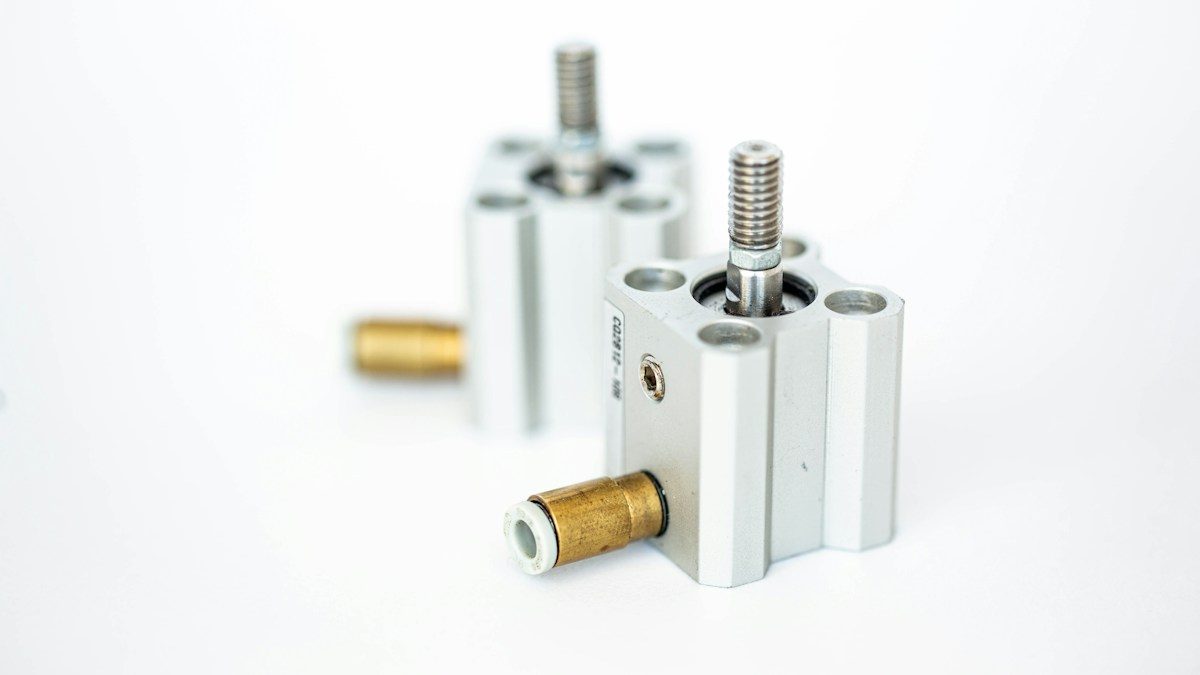
A pneumatic cylinder part number that comes back "not orderable" is usually not a typo and not a discontinued product. It is most often an OEM special: a catalog cylinder the machine builder had modified, which the manufacturer builds only against that builder's specification. The manufacturers' catalogs say this directly. SMC marks these with a "-X" suffix and files them under "Made to Order," with the legend "Special product (For details, please contact SMC.)" Festo states that "a few deviations are enough to turn a standard pneumatic cylinder into a special pneumatic cylinder." You spot a special by the suffix, by whether the number will build in the manufacturer's online configurator, and by asking the manufacturer. If it will not build, stop chasing the number. Ask the machine builder for it, or send a distributor the physical specification (bore, stroke, mounting, port size and position, rod thread, cushion, sensor requirement, pressure) and have a compatible alternative specified from the catalog.
How a cylinder part number is built
Every major manufacturer assembles a cylinder model number from a fixed sequence of option fields. The field names differ, but the content is the same: series, bore, stroke, mounting, action, cushion, magnet, rod end, port, and seal or environment options.
SMC's CQ2-Z compact cylinder is a clear example. The ordering code runs series, mounting (through-hole, both ends tapped, foot, rod flange, head flange, double clevis), bore (12 to 100 mm), stroke, action ("D" for double acting), body options ("C" rubber bumper, "M" rod end male thread, "F" boss on head end), and port thread (Rc, NPT or G variants). The "Z" marks the auto switch mounting groove on the body. SMC's ISO cylinder configurator for the C96 series follows the same logic with mounting letters B, L, F, G, C, D, T and V, bore, stroke, rod boot, single or double rod, and auto switch selection.
Festo's DSBC, its ISO 15552 cylinder, is coded as type, piston diameter (32 to 80 mm in the referenced sheet), stroke, cushioning ("PPV" adjustable pneumatic, "PPS" self-adjusting), position sensing ("A" via proximity switch), and standard ("N3" for ISO 15552). Festo's ADN compact cylinder adds piston rod thread ("A" male, "I" female), cushioning ("P" elastic, "PPS" pneumatic), position sensing "A," then a long tail of variant codes: "Q" square rod, "S2" through rod, "S6" heat-resistant seals, "K5" special piston rod thread, "TL" laser-etched rating plate, and more.
AirTAC's product pages for its SC tie-rod and SGC/SAI ISO 15552 cylinders describe the series features and state that "cylinders and mounting accessories with several specifications are optional." AirTAC's letter designations are shown in the ordering-code diagram in its catalog.
Where the special code appears
The special lives at the end of the number. SMC appends a hyphen and an X code: "-XB6" is a heat-resistant cylinder, "-XC4" adds a heavy-duty scraper, "-XB10" marks an exclusive body built for a non-standard stroke. SMC groups these as "Made to Order" and "Simple Specials," and the catalog note that matters is the legend: "Special product (For details, please contact SMC.)" SMC also publishes a "Simple Special Order Specification Form" that the requester fills in with "the special order details." In other words, the special is defined by a form or drawing, not by a catalog page.
Festo handles it two ways. Many variants are part of the modular type code (the S, K, R and T codes above), so a long Festo number is not necessarily a special. Beyond that, Festo describes special designs that start when "minor modifications are all that's needed," through to "completely new designs," where "products are manufactured according to the customer's special requirements." The company's own summary: "It is therefore the shape or size of a special cylinder that usually differs from that of a standard cylinder."
Why OEM variants exist, and why distribution cannot duplicate them
Machine builders ask for specials for ordinary reasons: a port rotated to clear a guard, a non-standard stroke that fits the frame, a longer or metric-to-inch rod thread, a different cushion, heat- or chemical-resistant seals, food-grade lubricant, or a laser-marked rating plate with the builder's own number. The manufacturers' option lists show exactly these categories as special or made-to-order items: SMC's -XB6 heat-resistant seal and -XB10 exclusive stroke body, Festo's S6 heat-resistant seals, K5 special thread and TL laser-etched plate.
The distribution problem follows from how specials are defined. A -X item is built against SMC's special order form or an agreed drawing, and Festo's special designs are manufactured to the customer's requirements. The specification belongs to the party that filed it. A distributor can quote the base catalog model and every option that appears in the published code, but it typically cannot order a configuration whose definition is on a machine builder's drawing. That is why the number from the nameplate comes back unavailable even when the base cylinder is a stock item.
How to tell a catalog part from a special
Three checks, in order:
- Look for the suffix. For SMC, a trailing "-X" group is made to order or a simple special by definition. For Festo, compare each code against the published type-code table; a code that is not in the table is a special. For AirTAC and others, compare against the catalog ordering-code diagram.
- Try to build it. SMC and Festo both publish online configurators for their standard series. If the complete number from the nameplate will not assemble from the available menus, something in it is not a catalog option.
- Ask the manufacturer. SMC's own instruction is to contact SMC for details on special products; Festo's is "other variants are available on request." The answer will usually name the base model and the modification, which is what you need next.
The magnet decision: make it at order time
A position sensor on a pneumatic cylinder works by sensing a magnet built into the piston. That magnet is an order-time option, not an add-on. SMC's compact and ISO cylinders list the magnet as "None" or "D (Built-in)," and the "D" in CDQ2 versus CQ2 is that choice; the catalog describes the model as "With auto switch (Built-in magnet)." Festo's DSBC and ADN carry "A" for "position sensing via proximity switch," and Festo's DSNU round cylinder sheet states "Piston with magnet for sensing standard." ISO 21287, the compact cylinder standard, explicitly covers cylinders "with or without a magnetic function."
If you order the alternative without the magnet, you cannot fit a sensor later without replacing the cylinder. If the machine has a sensor on the cylinder today, or might, specify the magnet now.
What to do instead of chasing the number
- Ask the machine builder. The OEM holds the specification and may sell the part directly or release the base model and option list.
- Identify the base catalog model. Strip the special suffix and decode the rest against the manufacturer's ordering code. Often the only non-catalog item is one option, and a catalog cylinder plus a standard accessory covers it.
- Specify a compatible alternative. For bores 32 to 320 mm with detachable mountings, ISO 15552:2018 defines "basic, mounting and accessories dimensions" for "interchangeability of single or double rod pneumatic cylinders" rated 1,000 kPa (10 bar). ISO 6432:2015 does the same for round cylinders with bores from 8 to 25 mm, and ISO 21287:2004 covers compact cylinders from 20 to 100 mm, using ISO 15552 end-cover mountings from 32 mm up. A cylinder built to the matching standard will share mounting dimensions. It will not necessarily share port position, cushion behavior, rod thread or sensor slot, so those still have to be matched by specification.
What to send a distributor
Send these, and a cross-reference becomes a one-pass exercise:
- Photos of the cylinder, the nameplate, and the installed mounting.
- Bore and stroke (measure the stroke if the label is gone).
- Mounting style: foot, flange, clevis, trunnion, through-hole, tapped.
- Rod end thread (male or female, size and pitch) and rod extension.
- Port size and thread form, and port position relative to the mounting.
- Cushion: none, bumper, adjustable pneumatic or self-adjusting.
- Sensor requirement: is there a switch on it now, or will there be?
- Operating pressure, media (lubricated or dry air), ambient temperature, and cycle rate.
With that list, a distributor can decode the base model, flag which option was the special, and quote a compatible alternative that is actually orderable.
Sources
- SMC Corporation of America, CQ2-Z Series How to Order (PDF)
- SMC Corporation of America, CQ2-Z Compact Cylinder catalog (PDF)
- SMC Corporation, Air Cylinder Simple Specials / Made to Order Common Specifications
- SMC Corporation, Air Cylinder CS1 Series catalog (PDF)
- SMC Corporation, Simple Specials System
- Festo, Standards-based cylinders DSBC, to ISO 15552, datasheet (PDF)
- Festo, Compact cylinders ADN/AEN, to ISO 21287, datasheet (PDF)
- Festo, Compact cylinders ADNGF, standard hole pattern, datasheet (PDF)
- Festo, Round cylinder DSNU-ISO type, datasheet (PDF)
- Festo, Special pneumatic cylinders
- Festo, Special Applications Guide (PDF)
- AirTAC, SC Series Cylinder product page
- AirTAC, ISO 15552 Cylinder SGC Series product page
- ISO, ISO 15552:2018 Pneumatic fluid power, Cylinders with detachable mountings, 1 000 kPa (10 bar) series, bores from 32 mm to 320 mm, Basic, mounting and accessories dimensions (edition 2, confirmed 2025)
- ISO, ISO 6432:2015 Pneumatic fluid power, Single rod cylinders, 1 000 kPa (10 bar) series, bores from 8 mm to 25 mm, Basic and mounting dimensions (edition 2, confirmed 2020)
- ISO, ISO 21287:2004 Pneumatic fluid power, Cylinders, Compact cylinders, 1 000 kPa (10 bar) series, bores from 20 mm to 100 mm (edition 1, confirmed 2023)
- SMC Europe, C96S(D) ISO Cylinder, Double Acting, Single/Double Rod, configurator
- SMC Corporation of America, C(D)Q2W Compact Cylinder, Double Acting, Double Rod, configurator page
- Stateside Industrial Solutions, When the Part Number Is Gone: A Specification Method for Cross-Referencing an Inductive Proximity Sensor
- Stateside Industrial Solutions, Specifying a Process Pressure Gauge: The Seven Specs and How to Cross Manufacturers
All sources retrieved and independently verified October 2026.
Have a cylinder number that will not quote?
Send us the photos and the eight items on the list above and we will decode the base model and quote a compatible alternative.
Request a Quote →