
After the Storm: Restarting Compressed Air and Electrical Systems Safely
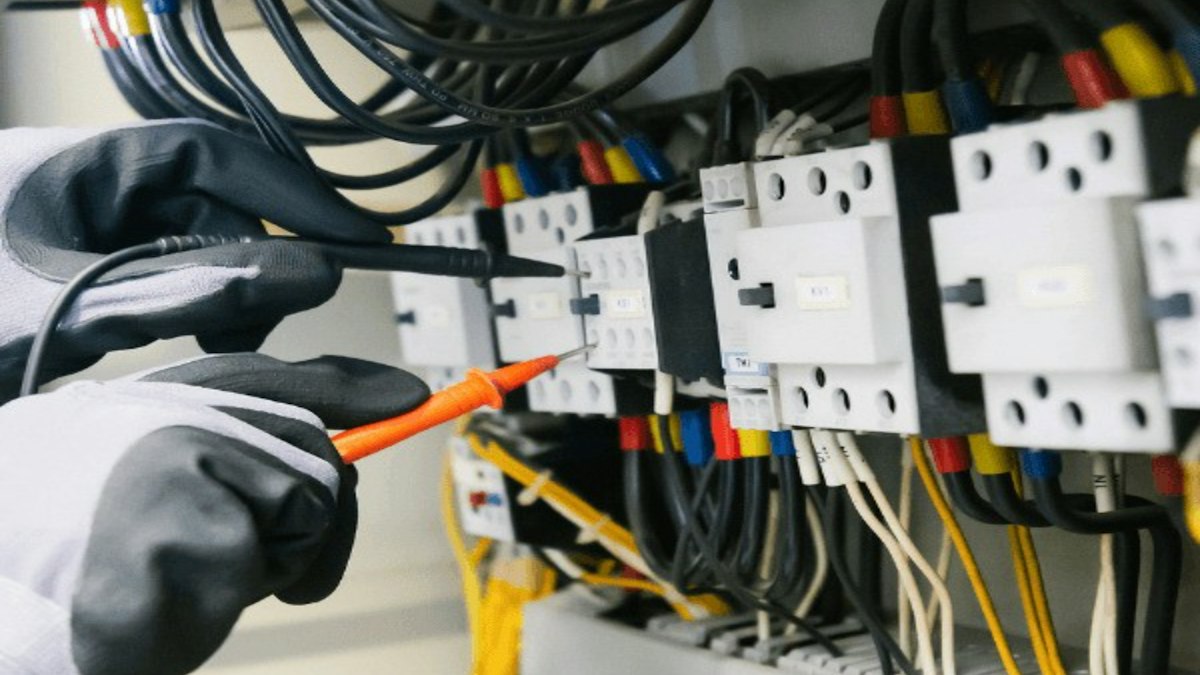
September 10 is the climatological peak of the Atlantic hurricane season, which runs through November 30. If your plant took a hit, rushing the restart is how an outage becomes a burned motor, a dead drive, or a hurt technician. This is the order of operations that prevents that, and the deep-dive companion to our storm-readiness piece: that one is the before-and-after checklist, this one is the full morning-after procedure.
Rule zero: nothing gets energized until it is proven safe
OSHA's hurricane guidance is blunt: assume every electrical line is energized until proven otherwise, because lines can go live again without warning as utilities restore service. Standing water near switchgear, panels, or motor control centers is a stop-work condition until a qualified electrician confirms the equipment is de-energized.
Under 29 CFR 1910.147, the authorized employee must verify isolation and de-energization before work starts, and before energy is restored the work area is inspected and affected employees notified. NFPA 70E, Standard for Electrical Safety in the Workplace (2024 edition), governs shock and arc flash protection for that work.
Step 1: Power quality first
Have a qualified electrician verify voltage on all phases, phase rotation, and the condition of the service entrance before any load is connected. If a protective device tripped during the event, OSHA 1910.334(b)(2) does not allow the circuit to be manually re-energized until it has been determined that the equipment and circuit can be safely energized. Resetting a breaker that tripped on a fault is how you cause a second fault.
A generator carrying the plant must run through a transfer switch installed by a qualified electrician; OSHA warns that a generator tied directly into building wiring can backfeed utility lines and endanger line crews.
Step 2: Utility or electrician?
The utility owns the lines and the meter. You own everything after it.
In Florida, FPL restores plants, transmission lines, and substations first, then critical facilities, then the largest customer groups. FPL says that if the meter box, pipe, or wires on the building are bent or broken, a licensed electrician needs to repair them before power can be restored, while FPL crews replace a damaged meter when they reach your area.
In Puerto Rico, LUMA Energy says any downed line must be treated as live, to stay at least 10 feet away, and to call 1-844-888-5862. LUMA requires that a generator be connected and disconnected by an electrician licensed by the College of Electrical Experts of Puerto Rico or by an electrical engineer, and says anything abnormal in your equipment after a storm goes to a licensed electrician.
Step 3: Flooded electrical equipment
If floodwater reached electrical equipment, follow NEMA's Evaluating Water-Damaged Electrical Equipment:
- Submerged molded-case circuit breakers get replaced. Water causes corrosion, introduces foreign particles, and removes lubrication.
- Submerged fuses get replaced. Water can degrade the filler and with it the interruption capability.
- Adjustable speed drives and other electronic equipment are generally replaced; NEMA says the drive manufacturer must be consulted before any refurbishment attempt. If a drive sat de-energized for weeks, ask the drive maker whether the DC bus capacitors need attention before restart.
- Dry-location cable gets replaced. Wet-location cable may be reusable only if the ends stayed dry, the cable is undamaged, and the manufacturer agrees.
- Saltwater and salt spray are singled out because the residue is both corrosive and conductive. That covers most of coastal Florida and all of Puerto Rico.
NFPA 70B, Standard for Electrical Equipment Maintenance, is the maintenance standard your contractor will use for the tests and records that follow; the 2026 edition revises the 2023 edition that first made 70B a standard rather than a recommended practice.
Step 4: Motors and drives
A wet motor is not a dead motor, but it is not a ready one either. EASA's guidance is to clean, dry, and test before energizing. Insulation resistance is the gate. EASA cites the IEEE 43 minimums as 5 megohms for random-wound machines and 100 megohms for form-coil windings; a motor that fails gets baked and retested, and one that fails twice gets rewound. IEEE lists 43-2013 as inactive-reserved with a revision open, so confirm which document your motor shop uses.
Saltwater is the enemy. EASA warns that unless salt is flushed out before the motor dries, the residue rusts laminations and corrodes windings, sometimes failing years later. Bearings and grease in a submerged motor are contaminated, so send flooded motors to a qualified service center rather than drying them on the plant floor.
Step 5: Compressor, dryer, receiver, piping, point of use
Compressor. Atlas Copco's restart guidance is to leave power off, remove the coupling guard, and turn the coupling by hand to confirm the compressor is free before restoring power. Then check oil level, drain water from the oil vessel, and inspect the air filter, cables, and connections. Turn on cooling water if the unit is water cooled. Stateside is an authorized Atlas Copco distributor and can get you the correct manual for your model.
Receiver and separators. Condensate collects in the receiver, and CAGI notes that liquid water accelerates corrosion and carries rust particles that plug valves, fittings, and instrument lines. Open every receiver, separator, and filter drain by hand before pressurizing, and confirm automatic drains cycle.
Dryer. Never start a dryer against an empty air net. Close the outlet valve, pressurize the dryer, then open the outlet gradually so the adsorbent bed is not damaged. Desiccant must be protected from compressor lubricant, which stops it from adsorbing water. If the compressor slugged oil or water downstream, have the desiccant inspected before trusting the dew point.
Distribution piping. Open the discharge valve slowly until pressure equalizes between compressor and piping. Walk the main and every drop for damage, then blow down drip legs and low points. Internal corrosion in steel pipe is the rust-particle problem CAGI describes. Aluminum systems such as Atlas Copco AIRnet use an extruded aluminum alloy with a treated interior that Atlas Copco rates as good against pitting and very good against layer corrosion, one reason plants replace steel mains after a flood.
Point of use. Blow down every drop before reconnecting tools, cylinders, and instruments, because liquid water washes lubricant out of pneumatic tools and increases wear. Submerged filters, regulators, and lubricators get opened and inspected or replaced.
Step 6: Document everything for the insurer
FEMA's flood claim guidance is to photograph and video all damaged property, including items you will discard, record water levels, and capture make, model, and serial numbers before anything is removed. Give the insurer prompt written notice and ask about deadlines. Keep the megger readings, the electrician's report, and the list of replaced breakers, fuses, and drives in the claim file.
The short version
Prove the power is safe. The utility owns the line, the electrician owns your side of the meter. Replace what NEMA says to replace. Test motors before you trust them. Start the air system slowly and drain everything twice. Then write it all down.
Sources
- NOAA National Hurricane Center, Tropical Cyclone Climatology
- OSHA Hurricane eMatrix, Removal of Floodwaters from Structures and Initial Entry into Previously Flooded Areas
- 29 CFR 1910.147, The Control of Hazardous Energy (Lockout/Tagout), via eCFR
- NFPA 70E, Standard for Electrical Safety in the Workplace, 2024 edition
- 29 CFR 1910.334, Use of Equipment, via eCFR
- OSHA Hurricane eMatrix, Restoring Electrical Utilities
- Florida Power & Light, How We Restore Power
- LUMA Energy, Frequently Asked Questions
- LUMA Energy, Response and Restoration Protocols (Tropical Storm Fiona)
- NEMA, Evaluating Water-Damaged Electrical Equipment (GD 1-2016, per the document's own filename and NEMA's hosting)
- NFPA 70B, Standard for Electrical Equipment Maintenance, 2026 edition
- EASA (Chuck Yung), How to Deal with Wet or Flooded Motors
- IEEE 43-2013, Recommended Practice for Testing Insulation Resistance of Electric Machinery (inactive-reserved)
- Atlas Copco, Advice for Stopping and Re-starting Air Compressors
- Atlas Copco, How to Restart Your Compressor After a Period of Inactivity
- Atlas Copco, How to Perform Air Compressor Maintenance
- CAGI, Compressed Air and Gas Handbook, Chapter 3: Compressed Air Treatment
- CAGI, Compressed Air Purity Guide
- Atlas Copco, AIRnet Engineering Specifications
- FEMA, How Do I Start My Flood Claim?
All sources retrieved and independently verified September 11 and 12, 2026.
Rebuilding after the water went down?
Need a compressor service manual, replacement filters and drains, or a quote on aluminum piping to replace a rusted main? Stateside is an authorized Atlas Copco and AIRnet distributor serving Florida and Puerto Rico. Send us your model numbers and a photo of the damage and we will get you a parts list.
Send Us the Model Numbers →