
Smart Panels Are Changing How Cabinet Wiring Actually Gets Done
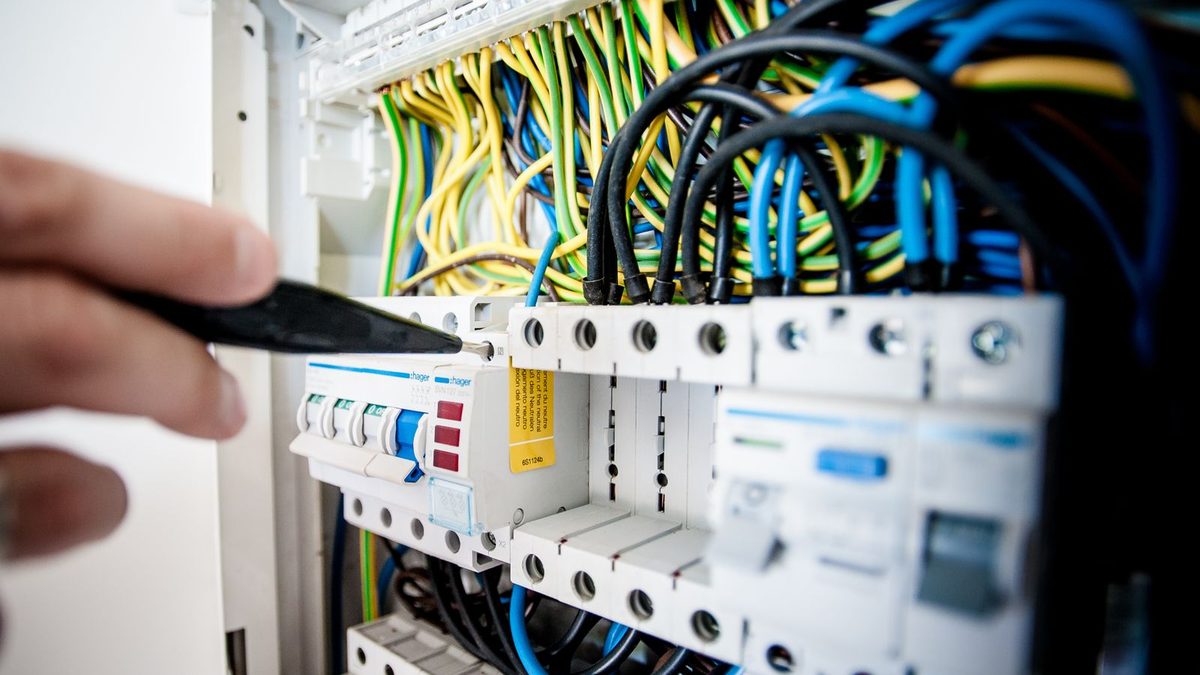
Open an older control cabinet and you'll usually find the same thing: point-to-point wiring, screw terminals, and a layout that made sense to whoever built it — and only to them. Every panel was its own one-off project, and every rebuild started closer to scratch than anyone wanted to admit.
That's changing. Between rising device counts, a tightened National Electrical Code, and a shrinking pool of people who can wire a panel from memory, cabinet building is moving from a craft practiced one way per shop toward something closer to a standardized, repeatable process.
What's driving the shift
Modern machines simply carry more electrical devices than they used to — safety relays, sensors, network switches, and I/O modules are all competing for the same enclosure space that used to hold a handful of contactors and a terminal strip. Denser panels make sloppy wiring more expensive to troubleshoot and more likely to cause a real problem.
The 2026 National Electrical Code adds real pressure on top of that. Arc-flash labeling is no longer limited to high-amperage gear — the old 1,000-amp threshold is gone, so switchboards, switchgear, enclosed panelboards, and motor control centers all need a compliant label now, and that label has to state actual numbers: nominal voltage, arc-flash boundary, available incident energy, and the date of the assessment. Working space rules tightened too — clearances now have to hold up with cabinet doors open, not just closed, and service (and now feeder) disconnects have specific placement and labeling requirements built around getting someone out safely in an emergency.
Layer rising labor costs and a real skills gap in panel wiring on top of that, and speed and repeatability stop being nice-to-haves. A design that's faster and more consistent to build isn't just cheaper — it's often the only way to get a panel built at all with the crew available.
Wiring and termination innovations
Tool-less termination systems — spring-clamp and push-in terminals in particular — are a big part of how shops are closing that gap. They give a more consistent connection than a screw terminal that depends on how hard someone torqued it down, and they're genuinely faster to land, which matters when a panel has hundreds of connections instead of dozens. Pre-terminated harnesses and modular wiring kits push that standardization further, letting a shop build the same sub-assembly the same way across multiple machines instead of hand-running every wire fresh each time.
Smarter panels and data visibility
The panels themselves are getting smarter, too. Integrated metering gives real-time visibility into loads and energy use without a separate monitoring system bolted on after the fact, and connectivity — Ethernet, fieldbus, IO-Link — turns what used to be a sealed box into an actual data source for the rest of the plant's automation. That data is what makes predictive maintenance and energy optimization practical instead of theoretical.
Design best practices for modern cabinets
The practical version of all this: keep the working space genuinely clear under the 2026 NEC, not just clear when the doors happen to be shut. Use structured cable management and real labeling so the next person into the panel — who may not be the person who built it — can actually troubleshoot it. And standardize on a proven layout and a consistent family of components across projects, instead of re-deciding the whole approach every time a new machine comes through.
What this means for buyers
For anyone speccing a panel build right now, the component decision is bigger than it looks on a line-item basis. The right terminal blocks, DIN-rail devices, and smart panel hardware can materially shrink both the assembly time and the future service time on a project — which is a real cost, even when it isn't the number printed on the quote.
Rebuilding a panel around the 2026 code?
Send us the spec — we'll help you match terminals, DIN-rail devices, and signal hardware to a build that's actually fast to wire and easy to service.
Talk to Our Team →